There is something rather extraordinary about the way children carry stories with them.
A book is read. The final page is turned. The cover closes.
And yet, somewhere between breakfast and bedtime, a character returns.
Perhaps a child remembers the little animal who was afraid to try something new. Perhaps they recognise a feeling they couldn’t quite explain before. Or perhaps, in the middle of an ordinary afternoon, they announce that they would have made a completely different decision from the character in their favourite story.
The book may be back on the shelf.
But the conversation is still unfolding.
This is one of the things I find most beautiful about storytelling. A story can be enjoyed simply because it is wonderful, funny, surprising or comforting. It doesn’t need to arrive with a lesson attached.
And yet, stories often give children opportunities to explore ideas and experiences that extend far beyond the pages.
They introduce unfamiliar places, invite questions, offer different perspectives and create moments of connection between children and the adults reading alongside them.
Sometimes, the most meaningful part of a story is not what happens inside the book.
It is what happens afterwards.
The Wonderful World Inside a Story
Think about the stories you remember from childhood.
You may have forgotten the exact words, the order of events or even the name of the book.
But perhaps you remember a character. A particular illustration. The excitement of not knowing what would happen next.
Or the feeling of sitting beside someone who read it to you.
Stories invite us into imagined worlds where almost anything can happen.
A small creature can become a courageous explorer. A journey through a forest can reveal unexpected friendships. An ordinary day can turn into an adventure that feels much bigger than the world outside the window.
For children, these experiences can be both entertaining and thought-provoking.
A story allows them to wonder what a character might do, anticipate what comes next and imagine possibilities beyond their immediate surroundings.
Children may return to the same book again and again, noticing details they missed or finding enjoyment in the familiar rhythm of a favourite scene.
We sometimes feel pressure to introduce something new every time we read with a child.
But a familiar story has its own value.
It provides opportunities to revisit ideas, recognise patterns, talk about favourite moments and gradually contribute more to the storytelling themselves.
The story doesn’t need to become a formal lesson.
Its value begins with the child’s enjoyment and engagement.
Everything else can grow from there.
Sometimes the stories children return to are the ones that give them something new to discover each time.
Why Children Connect With Characters
A memorable story character is rarely interesting simply because they are perfect.
Often, what makes a character compelling is that they experience something recognisable.
They feel excited about an adventure but uncertain about taking the first step.
They want to belong.
They make a mistake, misunderstand a friend or discover that something they expected to be easy is actually quite difficult.
Children can become deeply interested in what happens to these characters.
They may cheer them on, disagree with their decisions or want to know why they behaved in a particular way.
These reactions create opportunities for conversation.
Why do you think the character was upset?
What might their friend have been thinking?
What else could they have tried?
Such questions invite children to consider feelings, intentions and perspectives within the safe distance of a fictional story.
That distance can sometimes be useful.
A child who isn’t ready to talk about their own disappointment may still enjoy discussing a character’s disappointment.
A learner who finds friendship difficult may be willing to consider what two fictional friends could do differently.
This doesn’t mean that identifying with a story character automatically improves empathy or emotional regulation.
The evidence for broad emotional outcomes from storytelling depends on the type of intervention, the child’s circumstances and how outcomes are measured.
What we can say is that fictional characters offer rich opportunities to explore experiences, ask questions and consider possibilities.
And perhaps that is one reason some characters stay with us.
They give us someone to think about long after their story has ended.
A child may not yet have the words for their own experience, but they may recognise something familiar in a character's story.
The Real Magic Often Happens in the Conversation
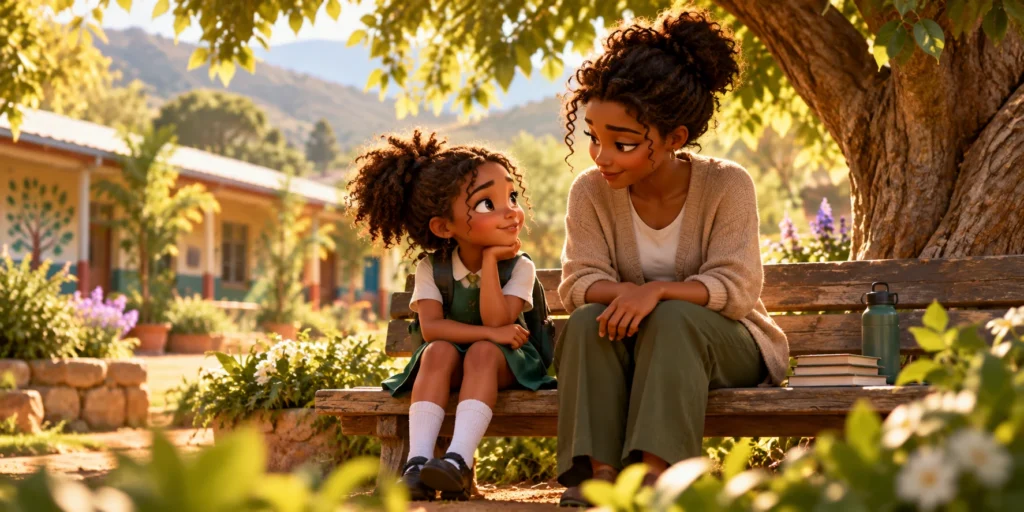
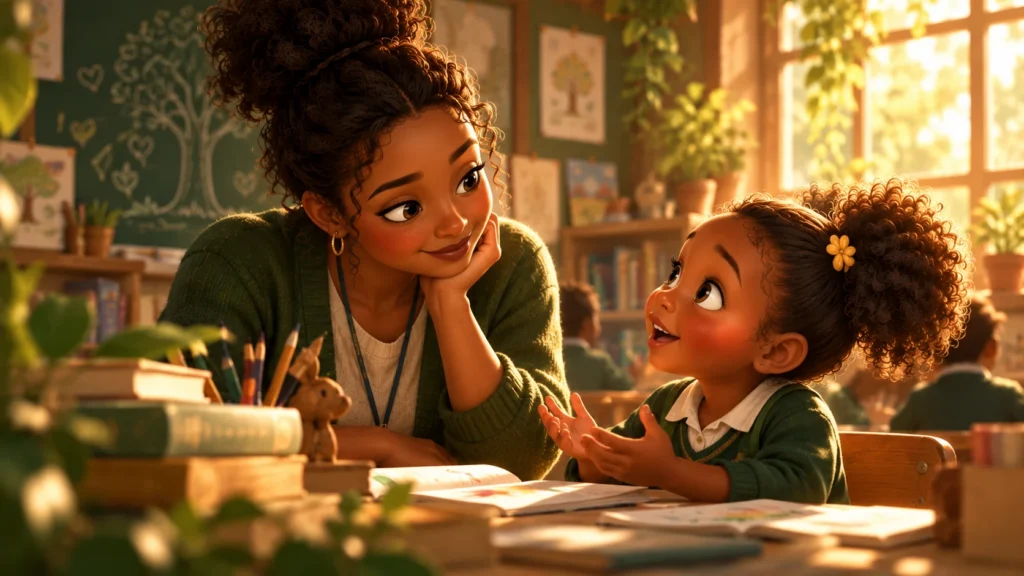
One of the most valuable parts of sharing a story is the conversation that happens between the child and the person reading with them.
A child points to a picture.
An adult notices what has captured their attention.
The child asks a question, and the adult responds.
Soon, the story has become something they are exploring together.
Researchers and educators often describe a more interactive approach to shared reading, in which adults encourage children to participate, talk about pictures, predict what might happen and connect the story with their own knowledge.
The Education Endowment Foundation’s evidence review identifies interactive reading as a useful approach for supporting early language and communication.
A 2020 systematic review and meta-analysis by Dowdall and colleagues examined 19 randomised trials involving 2,594 children aged one to six years. It found that book-sharing interventions designed to support caregivers were associated with improvements in children’s expressive and receptive language, although the effects varied.
These findings are encouraging, but they are not a promise that every story session will produce the same result.
The quality of the interaction matters.
An adult who listens carefully, follows a child’s curiosity and creates space for their ideas can turn shared reading into a lively exchange rather than a one-way performance.
Sometimes that means asking a question.
Sometimes it means explaining an unfamiliar word.
And sometimes it means allowing a child to interrupt the story to point out something important to them.
We don’t need to turn every page into a test.
The aim is not to see how many correct answers a child can produce.
It is to make room for conversation, understanding and enjoyment.
The most valuable question about a story is not always “What happened?” Sometimes it is “What do you think?”
When a Story Finds Its Way Into Everyday Life
Imagine a child becoming frustrated because something they are building keeps falling apart.
An adult remembers a story they recently enjoyed together, about a little character whose first attempt at building something didn’t work either.
Instead of immediately solving the problem, the adult might ask:
“Do you remember what happened when the character tried again?”
Perhaps the child remembers.
Perhaps they offer a completely different idea.
Or perhaps they decide that the fictional character was far more patient than they feel right now.
All of these responses can open a conversation.
A familiar story can give children and adults something to refer back to when navigating everyday situations.
The characters become part of a shared language.
A disagreement between fictional friends might help begin a conversation about resolving conflict.
A character learning to wait might offer a starting point for discussing patience.
A story about asking for help could remind a child that needing support is not a sign of failure.
This does not mean a story should replace listening to the child’s actual experience.
Children are not fictional characters, and real situations are often more complicated than the endings of books.
But shared stories can provide familiar examples through which adults and children explore choices and possibilities together.
The story becomes a starting point, not a script.
And that is part of what makes storytelling so adaptable.
The same book may lead to a conversation about courage one day and friendship the next.
What matters is not extracting every possible lesson.
It is recognising the moments when something in the story connects naturally with the child’s world.
The story becomes a starting point, not a script.
The Person Beside the Book Matters Too
When we think about the benefits of storytelling for children, we often focus on what is inside the book.
The words.
The illustrations.
The plot.
The lessons children might encounter.
But there is another part of the experience that deserves just as much attention.
The person sharing it with them.
Reading together can create a moment of undivided attention in an otherwise busy day.
A parent and child might settle onto the sofa after school.
A grandparent might share a favourite story from their own childhood.
An educator might gather a small group and invite children to guess what will happen next.
These interactions can provide opportunities for connection, communication and enjoyment.
Harvard’s Center on the Developing Child highlights the importance of responsive, back-and-forth exchanges between young children and caring adults.
Such interactions support the foundations of early language and social development.
Shared reading is one of many everyday opportunities for this kind of exchange.
And importantly, the experience does not need to look the same in every home or classroom.
Adults can tell stories aloud without a book.
Children can listen to stories in their home languages.
Families can revisit familiar tales, describe pictures or create their own stories together.
For younger children, listening and looking at illustrations may be enough on some days.
For older children, a story might lead to a lively disagreement about a character’s choices.
These moments are valuable not because every adult is delivering an expertly designed lesson, but because children are being invited into a shared experience.
The relationship is part of the learning.
Sometimes the most memorable part of a childhood story is the person who shared it with us.
Five Questions That Keep a Story Alive
You don’t need specialist training or an elaborate activity to encourage meaningful conversations around a story.
Often, a thoughtful question is enough to invite a child to share what they noticed.
Here are five questions parents, caregivers and educators can try.
1. “WHAT DO YOU THINK THE CHARACTER WAS FEELING?”
This invites children to notice expressions, situations and possible emotions.
There isn’t always one correct answer. Different children may interpret the same moment differently.
2. “WHAT WOULD YOU HAVE DONE?”
Children can imagine themselves in the situation and consider different choices.
Their responses may surprise you. Rather than immediately correcting an answer, ask what made them think that way.
3. “WHAT DO YOU THINK WILL HAPPEN NEXT?”
Prediction encourages children to use what they already know about the story while imagining possible outcomes.
You can pause before turning a page or invite children to create alternative endings.
4. “DOES THIS REMIND YOU OF SOMETHING?”
This creates an opportunity to connect a fictional situation with a familiar experience.
A character starting school might remind a child of their own first day. A story about sharing might lead to a conversation about siblings or friends.
Follow the child’s lead. They don’t need to disclose a personal experience simply because an adult has asked.
5. “WHAT WOULD YOU LIKE TO ASK THE CHARACTER?”
This invites curiosity, imagination and perspective-taking.
A child might ask why the character made a decision, what they were afraid of or whether they would do something differently next time.
The answers may be funny, thoughtful or entirely unexpected.
There is no need to ask all five questions every time you read.
Choose one that feels natural, or let the child begin the conversation.
Some days, reading a story from beginning to end without stopping will be exactly what the child wants.
That matters too.
Shared reading should remain something to enjoy, not another activity that children feel they must perform correctly.
You don't have to ask every question. Sometimes the most important thing is simply being curious about a child's answer.
Why Stories Sit at the Heart of Heartwood
When I began developing Heartwood Tales, I kept returning to a simple idea.
Children are naturally drawn to stories.
They become attached to characters, wonder about what might happen next and remember moments that mean something to them.
I wondered what could happen if we created stories that children genuinely wanted to experience, while also giving the adults around them opportunities to explore the important lessons within those stories.
Not books that simply tell children to be kind, patient or brave.
But stories in which characters experience emotions, navigate relationships, make decisions and discover that growing up involves learning along the way.
The aim was never to make every story feel like a lesson.
The story itself had to matter.
The characters needed room to be interesting, imperfect and memorable.
And the conversations that followed needed to feel natural.
This thinking became an important part of the wider Heartwood approach.
Our story-based resources are designed to give children and trusted adults a shared starting point for exploring real-life situations and practical capabilities.
A story about patience can open a conversation about waiting.
A character navigating disappointment can invite a child to reflect on their own feelings.
A moment of kindness can become something a child recognises in their classroom or home.
Of course, a memorable story alone is not proof of measurable developmental impact.
Meaningful learning depends on many factors, including the quality of the story, the opportunities for discussion, the child’s developmental stage and the support provided by adults.
But stories offer us something valuable.
They allow important conversations to begin somewhere familiar, engaging and full of possibility.
And sometimes, that is all a child needs to take the first step towards understanding something new.
We didn't want to create lessons disguised as stories. We wanted stories worth loving, with lessons worth carrying.
Closing reflection
Perhaps that is what I love most about stories.
They don’t always finish when we reach the final page.
A character may stay with a child long after the book has been returned to the shelf.
A conversation might continue over dinner.
A question asked during storytime may lead to another question days later.
And a moment of understanding might appear unexpectedly, in the middle of an otherwise ordinary day.
We don’t need every story to teach a lesson.
Children deserve stories that make them laugh, wonder, imagine and simply enjoy being children.
But when stories create opportunities for connection and understanding, something lovely happens.
The book becomes more than an object we hold.
It becomes an experience we share.
And sometimes, the most meaningful part of that experience is what children carry with them after the cover closes.
Research and further reading